On this page
The short version
- Runner's knee (patellofemoral pain) is pain around or behind the kneecap, often worse on stairs, squatting, running downhill or sitting for long periods.
- It's very common and usually a load problem rather than damage. Scans are rarely needed.
- Exercise therapy is the best-supported treatment. Combining hip and knee strengthening works better than either alone.
- Reduce aggravating load rather than stopping completely. Small changes like slightly faster cadence can ease pain while running.
- Most people improve within 6 to 12 weeks of consistent exercise, but it can take longer, so stick with it.
It starts as an ache around the kneecap. Maybe after a long run, maybe after a hilly route, maybe after sitting through a film with your knees bent. Then it shows up on stairs, especially going down. Squatting to pick something up becomes uncomfortable. You start to wonder whether you've damaged something.
Usually you haven't. Pain around or behind the kneecap, known as patellofemoral pain or "runner's knee", is one of the most common problems in running and in sports with lots of jumping and changing direction. It's frustrating and can hang around for months, but it's rarely a sign of structural damage, and it responds well to the right exercises.
This guide explains what runner's knee is, why it happens, the exercises with the best research behind them, how to keep running while it settles, and when to get it checked.
What is runner's knee?
Your kneecap (patella) sits in a groove at the end of your thigh bone (femur). As you bend and straighten your knee, the kneecap glides up and down in this groove. The joint between them is the patellofemoral joint.
Patellofemoral pain is pain around or behind the kneecap that's brought on by activities that load this joint with the knee bent: squatting, stairs, running (especially downhill), jumping, kneeling and prolonged sitting. That's the definition used in the 2016 consensus statement from the International Patellofemoral Pain Research Retreat, led by Kay Crossley, and in the 2019 clinical practice guideline from the American Physical Therapy Association, led by Richard Willy.
It's very common. A 2018 systematic review by Benjamin Smith and colleagues estimated that around one in four or five people in the general population report patellofemoral pain each year, with higher rates in adolescents and in active groups such as runners and military recruits. Women are affected more often than men.
Is it damage?
Generally, no. Runner's knee is best thought of as a sensitive joint that has been loaded more than it currently tolerates. Scans often look normal, and when they don't, the changes they show (such as cartilage wear) are also common in people without any knee pain. That's why the clinical guidelines don't recommend routine imaging for typical patellofemoral pain.
This matters because fear of damage often makes people stop moving altogether, which tends to make things worse. Understanding that the problem is mainly about load, and that load can be adjusted, is part of getting better.
Symptoms
Typical signs of patellofemoral pain include:
- A dull, aching pain around, behind or under the kneecap.
- Pain going down stairs or slopes, often more than going up.
- Pain when squatting, lunging, kneeling or jumping.
- Pain after sitting for a long time with knees bent (sometimes called the "theatre sign").
- Pain that builds during a run, especially downhill or on long runs.
- Sometimes a grinding or clicking feeling, which on its own isn't usually a concern.
When it might be something else
Other knee problems can feel similar. Get your knee assessed if you have:
Your knee swells noticeably, locks or catches so you can't straighten it, gives way, or the pain started after a twist, fall or impact. Pain on the outside of the knee during running may be iliotibial band syndrome. Pain just below the kneecap that's worse with jumping may be patellar tendinopathy. These need slightly different approaches.
Why runner's knee happens
There's rarely a single cause. Patellofemoral pain usually comes from a combination of how much load the joint takes and how well the surrounding tissues handle it.
Training load
As with most running injuries, sudden changes are the usual trigger: a jump in weekly mileage, a new hilly route, more downhill running, a return after a break, or switching from trail to road. Downhill running is particularly demanding on the patellofemoral joint because the quads work hard to control the knee as it bends.
Hip and thigh strength
Research consistently finds that people with patellofemoral pain tend to have weaker hip and thigh muscles than people without it. When the hip muscles fatigue or lack strength, the thigh can turn inwards and the knee can drift inwards during landing, which may increase stress on the joint. Weak quadriceps reduce the knee's ability to absorb load.
Whether weakness causes the pain or results from it isn't fully settled, but strengthening these muscles reliably helps, which is what matters in practice.
Running mechanics
A 2016 systematic review by Bradley Neal and colleagues found that runners with patellofemoral pain showed some differences in how they move, including more hip adduction (the thigh moving towards the midline), and that targeted interventions could change these patterns. Overstriding, where your foot lands well ahead of your body with a straight-ish knee, tends to increase the load on the knee.
Other factors
Previous knee problems, the shape of the joint, foot posture and footwear can all play a part for some people. These are harder to change, which is why treatment focuses on load and strength.
Treatment: what the evidence supports
Both the 2016 consensus statement and the 2019 clinical practice guideline agree on the main approach: exercise therapy is the treatment with the strongest evidence, ideally combining hip and knee exercises, supported by education and load management. Other treatments can help in the short term but work best alongside exercise.
1. Hip and knee strengthening
Exercise therapy reduces pain and improves function in the short, medium and long term. The guidelines specifically recommend combining hip-focused and knee-focused exercises rather than doing either alone.
A 2015 meta-analysis by Simon Lack and colleagues found that exercise programmes including hip-strengthening work produced bigger pain reductions in the short term than knee exercises alone, and that combining hip and knee strengthening was effective in the medium term too.
2. Load management
You don't usually need to stop running altogether. Reduce the activities that provoke pain the most, typically long runs, downhill running and deep squatting, and keep doing what you can tolerate. More on this below.
3. Education
Knowing that patellofemoral pain is common, rarely means damage, and usually improves with exercise reduces fear and makes it easier to stick to rehab. The guidelines recommend it as part of treatment.
4. Short-term helpers
- Foot orthoses: prefabricated insoles may reduce pain in the short term (around six weeks) for some people.
- Taping: patellar taping can ease pain for some, which may help you complete your exercises.
- Running changes: small adjustments to cadence or foot placement can reduce knee load while running.
The guidelines advise against relying on passive treatments such as ultrasound or electrical stimulation, and don't support knee braces or manual therapy as stand-alone treatments.
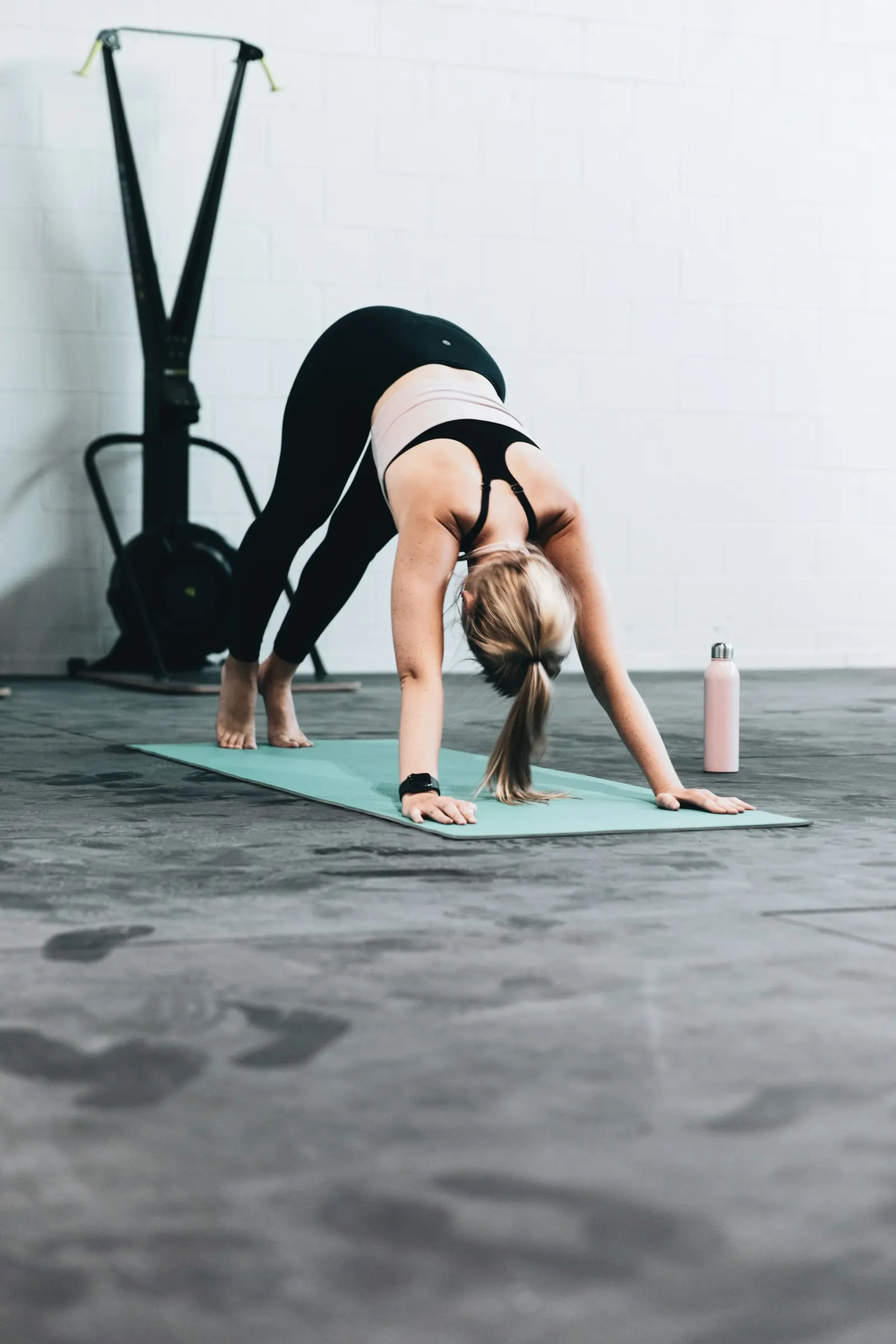
Exercises for runner's knee
These exercises follow the approach in the clinical guidelines. Do them three times a week. Some discomfort is acceptable: aim to keep pain at or below about 3 out of 10 during the exercises, and check that your knee feels no worse the next morning.
Phase 1: settle and start loading (weeks 1 to 3)
| Exercise | How to do it | Sets × reps |
|---|---|---|
| Side-lying hip abduction | Lie on your side, top leg straight and slightly behind you. Lift it towards the ceiling, toes pointing forward. | 3 × 12 to 15 each side |
| Clamshell with band | Lie on your side, knees bent, band above knees. Open the top knee without rolling your hips back. | 3 × 15 each side |
| Glute bridge | On your back, knees bent, push through heels to lift hips until your body forms a straight line. | 3 × 12 |
| Wall sit (pain-free depth) | Back against a wall, slide down only as far as comfortable, often 30 to 45 degrees of knee bend. | 4 × 30 to 45 sec |
| Straight-leg raise | On your back, tighten your thigh and lift the straight leg to the height of the other bent knee. | 3 × 12 each side |
Phase 2: build strength (weeks 4 to 8)
| Exercise | How to do it | Sets × reps |
|---|---|---|
| Box squat to a high box | Sit back to a box or bench, touch lightly, stand up. Lower the box over the weeks as pain allows. | 3 × 10 |
| Step-up | Step onto a low box, drive through the front heel, control the lowering. Keep the knee in line with your toes. | 3 × 10 each leg |
| Single-leg bridge | As the bridge, but one foot on the floor and the other leg extended. | 3 × 10 each side |
| Side plank with hip abduction | Side plank on your elbow, then lift the top leg. | 3 × 8 each side |
| Leg press or Spanish squat | Leg press through a comfortable range, or squat holding a band anchored behind your knees. | 3 × 10 to 12 |
Phase 3: return to running strength (weeks 8 and beyond)
| Exercise | How to do it | Sets × reps |
|---|---|---|
| Split squat | One foot forward, lower the back knee towards the floor, keep the front knee over the toes. Add dumbbells over time. | 3 × 8 each leg |
| Step-down | Stand on a step, slowly lower the opposite heel towards the floor, then return. Very specific to stairs and downhill running. | 3 × 10 each leg |
| Goblet squat | Hold a weight at your chest and squat to a depth you can control without pain. | 3 × 8 to 10 |
| Single-leg Romanian deadlift | Hinge forward on one leg with a weight in the opposite hand, keeping your hips level. | 3 × 8 each leg |
| Low-level hopping | Small hops in place on both legs, then on one leg, landing softly. | 3 × 10 to 20 |
Increase the weight or difficulty gradually as each phase becomes easy. Most people see meaningful improvement within 6 to 12 weeks, though some take longer. Keep going with some of the exercises even after pain has gone. Stopping too soon is a common reason it comes back.
Can you keep running with runner's knee?
In most cases, yes, with adjustments. The goal is to find a running load your knee tolerates while the exercises build capacity.
Use pain as a guide
- Pain during running should stay mild: around 3 out of 10 or less.
- It should settle within 24 hours, so your knee feels no worse the next morning.
- It shouldn't be getting worse week by week.
If all three hold, carry on. If not, reduce volume, pace or hills until they do.
Practical adjustments
- Cut hills first, especially downhill. Flat routes or a treadmill with a slight incline are often more comfortable.
- Shorten your runs rather than cutting them out. Several shorter runs may be easier than one long one.
- Slow down. Easy running loads the knee less than fast running. Our Zone 2 guide explains how to run easy properly.
- Cross-train. Cycling with a slightly higher saddle, swimming and pool running usually keep fitness without aggravating the knee.
Try a slightly quicker cadence
A 2011 study by Bryan Heiderscheit and colleagues found that increasing step rate by 5 to 10% while keeping the same speed reduced energy absorption at the knee and hip. In practice, that means slightly shorter, quicker steps, which also tends to bring your foot down closer to your body.
To try it, count your steps per minute on an easy run (or use your watch), then set a metronome app 5% higher. Use it for a few minutes at a time at first. Bigger changes to running form are best guided by a physiotherapist or coach, because changing too much at once can shift load somewhere else.
A sample return-to-running plan
If knee pain has stopped you running, this progression is a common template. Move to the next step only when your knee stays at or below 3 out of 10 during the run and feels fine the next morning.
| Step | Session (every other day) |
|---|---|
| 1 | Brisk walk 30 minutes, with 5 × 1 minute easy jogging |
| 2 | Walk 2 min, jog 3 min × 5 |
| 3 | Jog 20 minutes continuously, flat route |
| 4 | Jog 30 minutes, flat route |
| 5 | Build towards your normal easy runs, adding about 10% a week |
| 6 | Reintroduce gentle hills, then faster running, one change at a time |
Keep doing your strength exercises twice a week throughout, and long after you're back to normal running. Our strength training guide for runners has a plan you can move on to once rehab is finished.
Common mistakes with runner's knee
- Stopping all activity. Complete rest weakens the muscles that support the knee, so pain often returns when you start again.
- Pushing through worsening pain. If pain is rising each week, the load is too high.
- Only doing quad exercises. The best results come from combining hip and knee strengthening.
- Relying on passive treatments. Taping, insoles and massage can help short term but don't replace exercise.
- Stopping exercises as soon as pain eases. Strength built in rehab is what keeps the problem away.
Runner's knee in women
Patellofemoral pain is more common in women than in men. Differences in hip width, thigh alignment and relative hip strength may play a part, although the reasons aren't fully understood. The treatment approach is the same, and hip strengthening is particularly worth prioritising. Women who are under-fuelling for their training should also look at energy intake, because low energy availability affects tissue recovery throughout the body.
Preventing runner's knee
- Build mileage gradually and avoid sudden spikes in volume, hills or speed work.
- Keep strength training for the hips and thighs year-round, not just when you're injured.
- Introduce downhill running carefully, particularly before hilly races.
- Change shoes gradually if switching to a very different model.
- Listen to early warnings. An ache that lingers into the next day is the time to adjust, not after weeks of worsening pain.
Runner's knee often appears alongside other overuse injuries such as shin splints, because they share the same root cause: load increasing faster than the body adapts.
The bottom line
Runner's knee is common, frustrating and usually very treatable. It's rarely a sign of damage. The best evidence supports a combination of hip and knee strengthening, sensible load management and patience. Keep moving within comfortable limits, do the exercises consistently, and give it a few months. Most runners get back to full training, and many come back stronger than before.
Frequently asked questions
Should I stop running with runner's knee?
Usually not completely. Keep running at a volume and pace where pain stays mild (around 3 out of 10 or lower) and settles by the next day. Cut hills and downhill running first.
Do I need a knee brace or tape?
Taping and knee braces can reduce pain in the short term for some people, which may help you do your exercises. They don't fix the problem on their own.
Will runner's knee cause arthritis?
Patellofemoral pain is not the same as arthritis and doesn't automatically lead to it. Staying active and strong is good for long-term knee health.
Are my running shoes the problem?
Rarely the whole story. If your shoes are badly worn or you recently changed to a very different model, that's worth correcting. Foot orthoses can help some people in the short term.
Why does my knee hurt after sitting?
Long periods with the knee bent increase pressure behind the kneecap. Straightening your leg regularly, or sitting with it slightly extended, often helps.
When should I see a physio?
If pain isn't improving after three or four weeks of sensible changes, if your knee swells, locks or gives way, or if pain started after a twist or fall.
Sources and further reading
- Crossley KM, et al. 2016 Patellofemoral pain consensus statement from the 4th International Patellofemoral Pain Research Retreat, Manchester. Part 1: Terminology, definitions, clinical examination, natural history, patellofemoral osteoarthritis and patient-reported outcome measures. British Journal of Sports Medicine, 2016;50(14):839-43. DOI PubMed
- Willy RW, et al. Patellofemoral Pain. The Journal of Orthopaedic and Sports Physical Therapy, 2019;49(9):CPG1-CPG95. DOI PubMed
- Smith BE, et al. Incidence and prevalence of patellofemoral pain: A systematic review and meta-analysis. PloS One, 2018;13(1):e0190892. DOI PubMed
- Lack S, et al. Proximal muscle rehabilitation is effective for patellofemoral pain: a systematic review with meta-analysis. British Journal of Sports Medicine, 2015;49(21):1365-76. DOI PubMed
- Heiderscheit BC, et al. Effects of step rate manipulation on joint mechanics during running. Medicine and Science in Sports and Exercise, 2011;43(2):296-302. DOI PubMed
- Neal BS, et al. Runners with patellofemoral pain have altered biomechanics which targeted interventions can modify: A systematic review and meta-analysis. Gait & Posture, 2016;45:69-82. DOI PubMed
This guide is general education, not a diagnosis or treatment plan. If you have pain that is severe, getting worse or not improving after two to three weeks, see a doctor or physiotherapist. Read our full medical disclaimer.
Photography: Unsplash contributors. Published 16 October 2026, last reviewed 16 October 2026.