
On this page
- Why running is worth it
- The golden rule: slow down
- Run-walk: the best way to start
- How often should a beginner run?
- Why beginners get injured, and how to avoid it
- What you actually need
- Your eight-week beginner running plan
- Breathing, form and other common questions
- After the eight weeks: what next?
- Running when you're older, heavier or returning after a break
- Common beginner mistakes
- Your first week
- FAQ
- Sources
The short version
- Start with run-walk intervals and run slowly enough to talk. Almost every beginner goes too fast.
- Three sessions a week with rest days between is the right starting point.
- New runners get injured more often than experienced ones, mostly from doing too much too soon. Build gradually.
- Comfortable running shoes matter more than expensive ones. Fit and comfort are the best guides.
- Even small amounts of running are linked to a lower risk of early death. You don't need to run far or fast to benefit.
Running looks like the simplest sport there is. Put on some shoes, open the door, go. And yet a lot of people who start running stop within a few weeks, usually for one of three reasons: it feels miserable, something starts to hurt, or life gets in the way.
All three are avoidable. Running feels miserable at first mainly because beginners go too fast. Injuries mostly come from doing too much too soon. And the habit is much easier to keep when the plan is realistic from the start.
This guide covers everything you need to start running and keep going: how slow to run, how often, what kit actually matters, how to avoid the common beginner injuries, and an eight-week run-walk plan that takes you from your first steps to 30 minutes of continuous running.
Why running is worth it
The health case for running is strong, and you don't need to run far or fast to benefit.
In 2014, Duck-chul Lee and colleagues followed more than 55,000 adults for an average of 15 years. Runners had about a 30% lower risk of dying from any cause and a 45% lower risk of dying from cardiovascular disease than non-runners. Strikingly, the benefits were similar even for people who ran as little as 5 to 10 minutes a day, or at slow speeds. Overall, runners lived about three years longer.
A 2020 meta-analysis by Željko Pedišić and colleagues, pooling data from over 230,000 people, found that any amount of running was linked to a 27% lower risk of death from all causes, along with lower risks of cardiovascular and cancer deaths. Even running once a week or less than 50 minutes a week was associated with benefit, and more running didn't clearly add further protection.
The message is encouraging: a little running, done consistently, goes a long way. You don't need to train for a marathon to get most of the health benefits.
The World Health Organization recommends 150 to 300 minutes of moderate activity or 75 to 150 minutes of vigorous activity a week for adults. Three 30-minute runs a week gets you most of the way there.

The golden rule: slow down
If you take one thing from this guide, make it this: run slowly enough to talk. You should be able to speak in full sentences. If you can only get out a few words, slow down or walk.
Almost every new runner goes too fast. They set off at a pace that feels "like running", get breathless within a couple of minutes, stop, and decide they're not built for it. The problem isn't fitness. It's pace.
Easy running builds your aerobic engine, the heart, lungs and blood vessels that supply your muscles with oxygen. It's also gentler on your legs. Experienced runners do most of their training at this easy effort too; our Zone 2 training guide explains why.
At first, your easy running pace might feel barely faster than a brisk walk. That's fine. It speeds up as your fitness improves.
Run-walk: the best way to start
Most beginners do best with run-walk intervals: short periods of running separated by walking breaks. For example, 1 minute of easy running followed by 2 minutes of walking, repeated.
Run-walk works because it:
- Lets you run more in total, with less fatigue.
- Gives your muscles, tendons and bones regular breaks.
- Keeps your effort easy, so sessions feel achievable.
- Builds confidence. Finishing a session feels very different from stopping because you couldn't go on.
There's nothing second-rate about walking breaks. Plenty of experienced runners use run-walk in marathons and ultramarathons.
How often should a beginner run?
Three times a week, with a rest day or walking day between runs, is the ideal starting point. For example: Monday, Wednesday and Saturday.
Rest days aren't lazy days. When you run, you put stress on your muscles, tendons and bones. Your body adapts during recovery, which is what makes you fitter and stronger. Bones and tendons adapt more slowly than your heart and lungs, which is why beginners often feel ready to do more before their legs actually are.
Why beginners get injured, and how to avoid it
New runners get injured more often than experienced ones. A 2015 meta-analysis by Solvej Videbæk and colleagues found that novice runners had around 17.8 injuries per 1,000 hours of running, compared with about 7.7 for recreational runners with more experience.
Most beginner injuries are overuse injuries: shin pain, knee pain, Achilles or calf pain. They happen when the load on a tissue rises faster than it can adapt.
How fast is too fast? A 2014 study by Rasmus Nielsen and colleagues followed novice runners and found that those who increased their weekly distance by more than 30% over a two-week period had a higher risk of some running injuries than those who progressed more gradually. Interestingly, a 2008 trial by Ida Buist and colleagues found that a slower 13-week beginner programme didn't reduce injuries compared with an 8-week one, so the details matter less than avoiding big jumps.
Practical ways to stay injury-free:
- Follow a gradual plan like the one below. Resist the urge to skip ahead.
- Keep every run easy. No racing, no chasing personal bests for the first couple of months.
- Repeat a week if it felt hard, rather than moving on.
- Take rest days seriously.
- Add strength training. Even two short sessions a week of squats, lunges and calf raises help. Our strength training guide for runners has a simple plan.
- Listen to pain. Mild muscle soreness is normal. Sharp, localised pain, pain that gets worse as you run, or pain that changes how you move is a reason to stop and rest.
If shin pain does turn up, our shin splints guide explains what to do.
What you actually need
Shoes
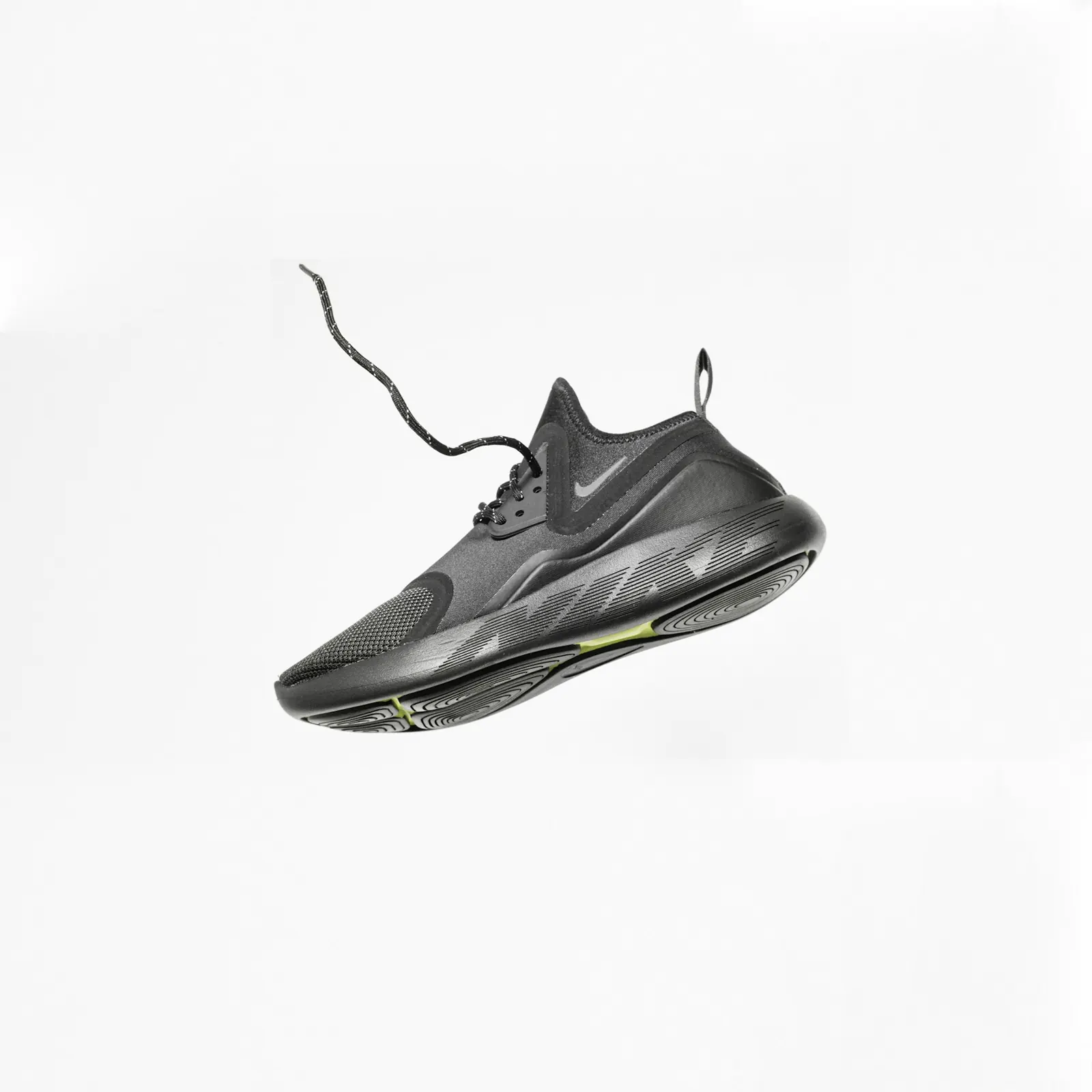
Running shoes are the one piece of kit worth spending a bit of money on. You don't need the most expensive pair, but you do want shoes designed for running that feel comfortable.
- Comfort first. Research suggests that choosing shoes based on comfort is a sensible approach. If they feel good from the first step, that's a good sign.
- Get the right size. Leave about a thumb's width between your longest toe and the end of the shoe, because feet swell during runs.
- Try a few pairs. A specialist running shop will let you jog in them.
- Don't overthink "pronation". Unless you have a specific foot problem, comfort matters more than matching your shoe to your foot type.
Clothing
Lightweight, breathable clothes that don't rub. Technical fabrics wick sweat better than cotton, which gets heavy and causes chafing. Women should invest in a good sports bra. In cold weather, layers you can remove.
Optional extras
- A watch or phone app for timing intervals.
- Reflective kit or a light for running in the dark.
- A cap and sunscreen for hot weather.
That's genuinely all you need. Fancy gadgets can come later if you want them.
Your eight-week beginner running plan
Do three sessions a week, with at least one rest day between them. Start each session with a 5-minute brisk walk to warm up, and finish with a 5-minute walk to cool down. Keep every running interval at an easy, conversational pace.
| Week | Main session (repeat 3 times this week) | Total running |
|---|---|---|
| 1 | Run 1 min, walk 2 min × 8 | 8 min |
| 2 | Run 2 min, walk 2 min × 6 | 12 min |
| 3 | Run 3 min, walk 2 min × 5 | 15 min |
| 4 | Run 4 min, walk 1.5 min × 4 | 16 min |
| 5 | Run 6 min, walk 1.5 min × 3 | 18 min |
| 6 | Run 8 min, walk 1 min × 3 | 24 min |
| 7 | Run 12 min, walk 1 min × 2, then run 5 min | 29 min |
| 8 | Run 20 min, walk 1 min, run 10 min. Final session: 30 min continuous | 30 min |
How to use the plan
- Repeat any week that felt hard. There's no prize for finishing in eight weeks rather than ten or twelve.
- Slow down before you stop. If a running interval feels too hard, slow to a shuffle before you walk.
- Use flat routes at first. Hills make easy running much harder.
- Don't make up missed sessions by doubling up. Just carry on with the next one.

Breathing, form and other common questions
How should I breathe?
Naturally, through your nose and mouth. If you're gasping, you're going too fast. Some runners find a rhythm helpful, such as breathing in for three steps and out for two, but there's no need to force it.
What's good running form?
Don't overthink it. A few simple cues help most beginners:
- Run tall, with relaxed shoulders.
- Let your arms swing naturally, elbows bent at roughly 90 degrees.
- Take short, light steps rather than long, reaching strides.
- Land with your foot roughly under your body, not far out in front.
- Look ahead, not at your feet.
Your form will improve naturally as you get fitter and stronger.
Where should I run?
Anywhere safe and convenient. Parks, quiet roads, tracks, trails and treadmills all work. Softer surfaces like grass and trails are kinder to legs but can be uneven, so watch your footing. Running from your front door removes one more excuse.
Should I eat before running?
For short, easy runs, many people feel fine running on an empty stomach or after a light snack. Avoid a big meal in the two hours before running. Our guide to eating before and after exercise covers this in more detail.
How do I stay motivated?
- Schedule your runs like appointments.
- Run with a friend or join a beginners' group.
- Sign up for a free weekly 5 km event such as parkrun to give yourself a goal.
- Track your sessions so you can see your progress.
- Remember that most runs feel harder in the first five minutes. Give it ten before deciding how you feel.

After the eight weeks: what next?
Once you can run for 30 minutes without stopping, you have several options:
- Consolidate. Keep running three times a week for 30 minutes for a few weeks. Let your body settle.
- Run a 5 km. Many beginners can complete 5 km in around 30 to 40 minutes at this point. A local event is a great milestone.
- Build gradually. Add a fourth short run, or extend one run each week by 5 minutes.
- Add variety. After a couple more months, try some short faster sections, such as strides at the end of a run.
- Keep strength training. It becomes even more important as your running increases.
Running when you're older, heavier or returning after a break
The same plan works for almost everyone, with a few adjustments:
- If you're over 50 or haven't exercised in years, consider starting with a few weeks of brisk walking first, then begin the plan.
- If you're carrying extra weight, the impact of running is higher, so progress more slowly and include low-impact cardio such as cycling or swimming.
- If you're returning after a break, start a couple of weeks further back than where you think you are. Fitness returns faster than your tendons do.
- If you have a medical condition such as heart disease, high blood pressure or diabetes, or you're pregnant, check with your doctor before starting.
You have chest pain, severe breathlessness, dizziness, fainting or palpitations while running. Stop immediately and seek medical advice before running again.
Common beginner mistakes
- Running too fast. The number one mistake. Slow down.
- Doing too much too soon. Excitement leads to extra sessions and longer runs. Stick to the plan.
- Running every day. Rest days are when you adapt.
- Ignoring pain. Muscle soreness is normal; sharp or worsening pain isn't.
- Wearing the wrong shoes. Old fashion trainers or worn-out shoes make running harder and less comfortable.
- Comparing yourself to others. Your only comparison is you, a few weeks ago.
Your first week
- Pick three days with rest days between.
- Get comfortable shoes and clothes.
- Plan a flat route of about 2 to 3 km, or use a treadmill.
- Do week one of the plan: 5-minute walk, then run 1 minute and walk 2 minutes eight times, then a 5-minute walk.
- Run slowly enough to talk the whole time.
That's it. Twenty-five minutes, three times a week. Eight weeks from now, you'll be a runner.
Frequently asked questions
How fast should a beginner run?
Slowly enough to hold a conversation. If you can't speak in full sentences, slow down or walk. Speed comes later, after your heart, legs and tendons have adapted.
How often should I run as a beginner?
Three times a week, with a rest day or walk day between runs. That gives your body time to adapt and lowers your injury risk.
Is it OK to walk during runs?
Yes. Run-walk is one of the best ways to start, and many experienced runners use it in long races too. Walking breaks let you run more in total with less fatigue.
Should I run every day to improve faster?
Not at first. Muscles and lungs adapt quickly, but bones and tendons adapt more slowly. Rest days are when that adaptation happens.
Why does running feel so hard at the start?
Your heart, lungs and legs aren't used to it yet. Most beginners also run too fast. Slow down and add walking breaks, and it gets noticeably easier within three to four weeks.
Do I need a running watch or app?
No. A simple timer is enough for run-walk intervals. Apps can help with motivation and tracking, but they're optional.
Sources and further reading
- Lee DC, et al. Leisure-time running reduces all-cause and cardiovascular mortality risk. Journal of the American College of Cardiology, 2014;64(5):472-81. DOI PubMed
- Pedisic Z, et al. Is running associated with a lower risk of all-cause, cardiovascular and cancer mortality, and is the more the better? A systematic review and meta-analysis. British Journal of Sports Medicine, 2020;54(15):898-905. DOI PubMed
- Videbæk S, et al. Incidence of Running-Related Injuries Per 1000 h of running in Different Types of Runners: A Systematic Review and Meta-Analysis. Sports Medicine, 2015;45(7):1017-26. DOI PubMed
- Nielsen RØ, et al. Excessive progression in weekly running distance and risk of running-related injuries: an association which varies according to type of injury. The Journal of Orthopaedic and Sports Physical Therapy, 2014;44(10):739-47. DOI PubMed
- Buist I, et al. No effect of a graded training program on the number of running-related injuries in novice runners: a randomized controlled trial. The American Journal of Sports Medicine, 2008;36(1):33-9. DOI PubMed
- Bull FC, et al. World Health Organization 2020 guidelines on physical activity and sedentary behaviour. British Journal of Sports Medicine, 2020;54(24):1451-1462. DOI PubMed
This guide is general education, not a diagnosis or treatment plan. If you have pain that is severe, getting worse or not improving after two to three weeks, see a doctor or physiotherapist. Read our full medical disclaimer.
Photography: Unsplash contributors. Published 14 October 2026, last reviewed 14 October 2026.